MIRIAM: A VOICE THAT LEADS

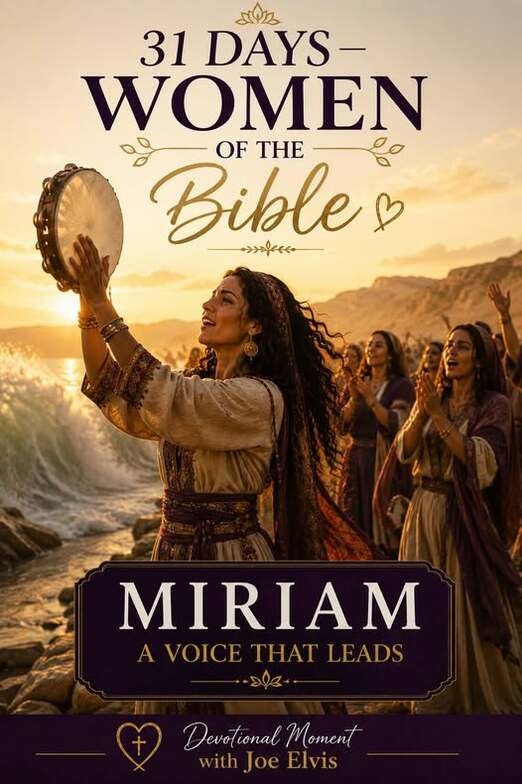
Before anyone danced, somebody watched.
Before Miriam took up the tambourine, before she became the prophetess by the sea, before anyone remembered her song, she stood there first, just a sister, standing back, observing.
When Exodus 2 introduces Miriam, there are no cheers. Instead, there’s courage.
Picture it, a baby hidden among the reeds, a mother aching with hope, a royal decree that spells danger. And in the middle of it, a young girl who doesn’t flinch.
She watches.
Not as a bystander. Not out of fear. She’s careful, deliberate.
Scripture describes her standing “at a distance to see what would happen.”
Don’t miss that detail.
Miriam’s leadership didn’t begin in the spotlight. It took root in discernment. In simply being present, in refusing to turn away.
And when Pharaoh’s daughter discovers Moses, Miriam steps forward, not as a scared child, but as a voice steady with wisdom:
“Shall I go and call a Hebrew woman...?” — Exodus 2:7
With one question, she helps save Moses’ life and ensures he won’t lose his connection to his mother.
Think about that.
Before Moses became a leader, Miriam used her voice to protect the deliverer.
Her story makes something clear, leadership isn’t always loud. Sometimes it starts quietly, with the wisdom to know when to speak up.
Then there’s the sea.
Israel crosses. The weight of oppression falls away. Bondage is left in the past.
And Miriam is there again.
Now she isn’t standing in the background, watching. She’s leading from the front.
“Miriam the prophetess...” — Exodus 15:20
Prophetess.
She picks up the tambourine. The women gather behind her. And she leads them, singing freedom into the air. She doesn’t just rejoice in liberation. She gives it a voice.
Miriam shows us something vital: Some voices aren’t meant just to survive history, they shape how it’s remembered.
She stands among the first female spiritual leaders in Scripture, sharp-eyed, wise, musical, prophetic.
And still, her story is deeply human. She later stumbles, speaks out of turn, faces real consequences (Numbers 12). The Bible doesn’t erase her flaws.
That, maybe, is part of her greatest lesson: A powerful voice still needs humility.
Leadership isn’t perfection, it’s owning responsibility.
Miriam’s story has a question tucked inside it: How are you using your voice? To protect? To guide? To praise? Or to wound?
Because voices do more than fill the air.
They shape what comes next.
Reflection:
Where is God urging you to speak up with courage? And where does real leadership demand both boldness and humility?
Micah 6:4 — “I sent Moses to lead you, also Aaron and Miriam.”
Read that once more.
Miriam, named among the leaders. Not hidden. Not a footnote. A leader.
Miriam’s life teaches us: some women aren’t just witnesses to deliverance, they help lead it.
So, be careful with your voice. Use it with intention. When God leads, one voice can help carry generations forward.

-
Location